
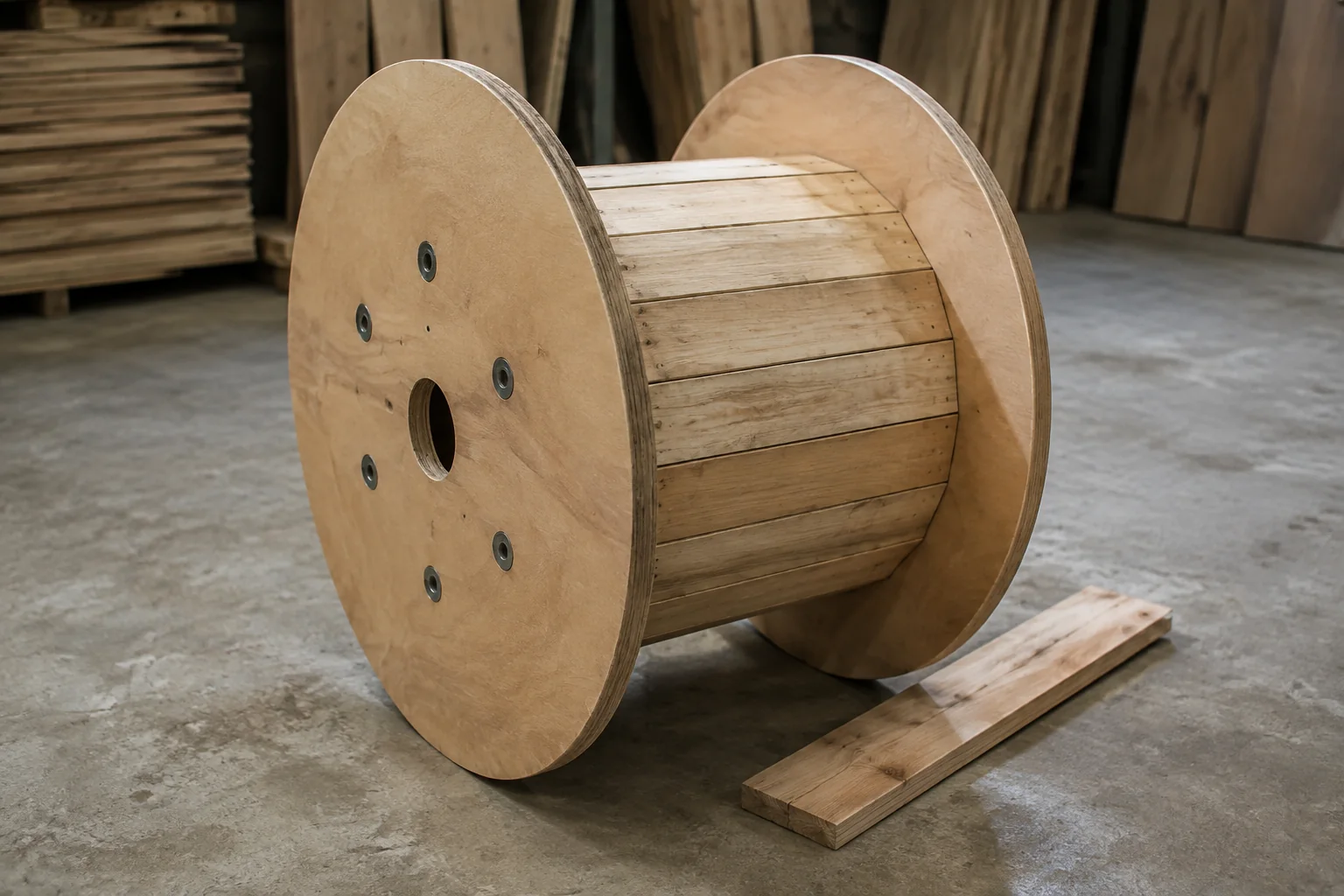
Start with the drawing: confirm the cable maker's drum specification, material construction and handling requirements. Identify whether the enquiry is for plywood, finished flanges or a complete drum. The written quotation defines the supply scope and required supporting documents.
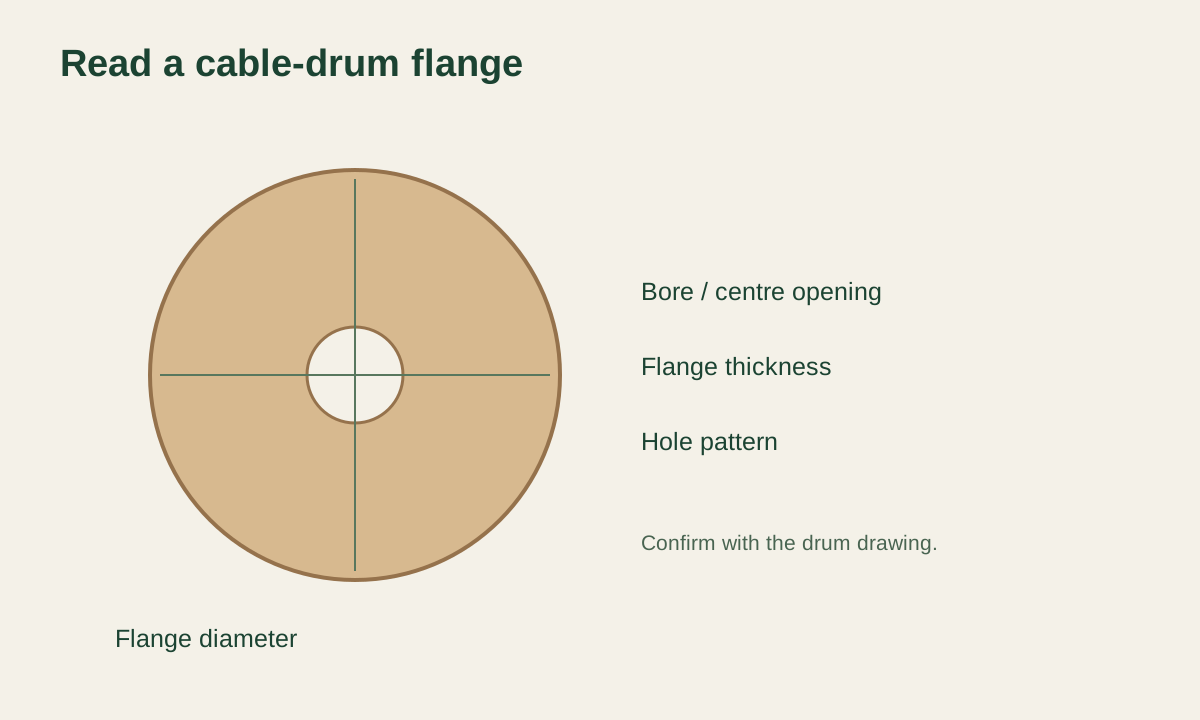
How a plywood cable drum is constructed
A wooden cable drum has three main components:
- Flanges — the two round side discs. Built up from multiple layers of commercial plywood (typically BWR, IS 303) bonded and cut to the required diameter. Confirm the required construction and evidence for the offered material.
- Barrel (drum body) — the cylinder the cable winds onto. Usually built from hardwood or rubberwood staves, or a combination of plywood and solid wood, depending on diameter and cable weight.
- Cheeks / internal supports — cross-members that brace the flanges and carry the barrel spindle. Solid hardwood.
The complete assembly must be assessed for winding, handling, transport and storage by the responsible drum designer.
Plywood grade for cable drum flanges
Use the construction and product standard specified by the approved drum design. Confirm the core, bond grade, dimensions and required evidence. BWP alone does not identify marine plywood, and a bond grade does not establish finished-drum capacity. See the drawing and enquiry guide.
ISPM-15 and cable drums
For export, confirm the destination requirements for the solid-wood barrel, staves and internal supports with the packer and importer. The plywood flanges are exempt from ISPM-15 (because the plywood manufacturing process eliminates pests). In the finished drums we supply, the solid-wood parts are treated and IPPC-marked by a DPPQS-registered treatment provider where the destination requires it; the treatment method follows the destination's rules, and a treatment certificate is supplied where the quotation states it. See ISPM-15 for plywood packaging for the full exemption rules.
Specifying a cable drum
To quote accurately we need:
- Flange diameter (outer diameter of the drum disc)
- Barrel width (distance between flanges — determines how much cable fits)
- Take-up capacity (cable weight / length) or the cable specification
- Flange thickness if already specified, as required by the approved drum drawing
- Destination port and whether ISPM-15 is required
- Quantity
Send the buyer-approved bill of materials and drawing so that the available fabrication scope can be confirmed in writing. See plywood cable drums for the full product page.
Cable types commonly wound on plywood drums
Power transmission cable, telecom and optical fibre cable, submarine cable, armoured control cable, and wire rope are all wound on wooden drums for export. The drum specification — diameter, flange strength, spindle bore — varies by cable weight and winding tension. We work from your BoM or the cable manufacturer's drum spec.
FAQ
What plywood grade is used for cable drum flanges?
Use the full product specification required by the drum designer, including construction, bond grade and evidence. Grade or thickness alone does not establish the capacity of the drum.
Do cable drums need ISPM-15 treatment?
Confirm the treatment and marking required for the destination and the solid-wood parts in the assembly. The plywood flanges are exempt. In the finished drums we supply, those parts are treated and IPPC-marked by a DPPQS-registered treatment provider where the destination requires it.
What information do you need to quote a cable drum?
Flange diameter, barrel width, take-up capacity (cable weight or length), flange thickness if specified, destination port and quantity. We can also work from your BoM or an existing drum drawing.
What is the difference between a plywood cable drum and a solid-wood drum?
The main difference is the flange construction; compare weight, dimensions and required performance for the actual designs. The barrel is usually solid wood in both types; the main difference is in the flange construction.
Need cable drums quoted?
Send the drum diameter, barrel width, cable load and destination port — the quotation will confirm the agreed supply scope and delivery term.