
What the exemption covers
ISPM 15 addresses plant-health risks from raw-wood packaging in international trade. Its processed-wood exemption includes plywood and other materials manufactured using glue, heat or pressure. It does not certify the contents of a case, the strength of the packaging or the suitability of a panel for direct contact with goods.
- Packaging composed entirely of wood no thicker than 6 mm has a separate thin-wood exemption.
- Processed panels such as plywood, particleboard and oriented strand board are a separate category; the 6 mm limit is not a thickness limit for plywood.
- Sawdust, wood shavings and wood wool are separately listed exemptions. Do not describe them as exempt only below a panel-thickness threshold.
This is a summary of the relevant categories, not the full exemption list. Confirm the material and destination with the importer or responsible plant-health authority.
Check the whole case or pallet
| Construction | What to check |
|---|---|
| All-plywood panels and supports | The processed-wood exemption applies to that packaging. Confirm other destination and cargo requirements separately. |
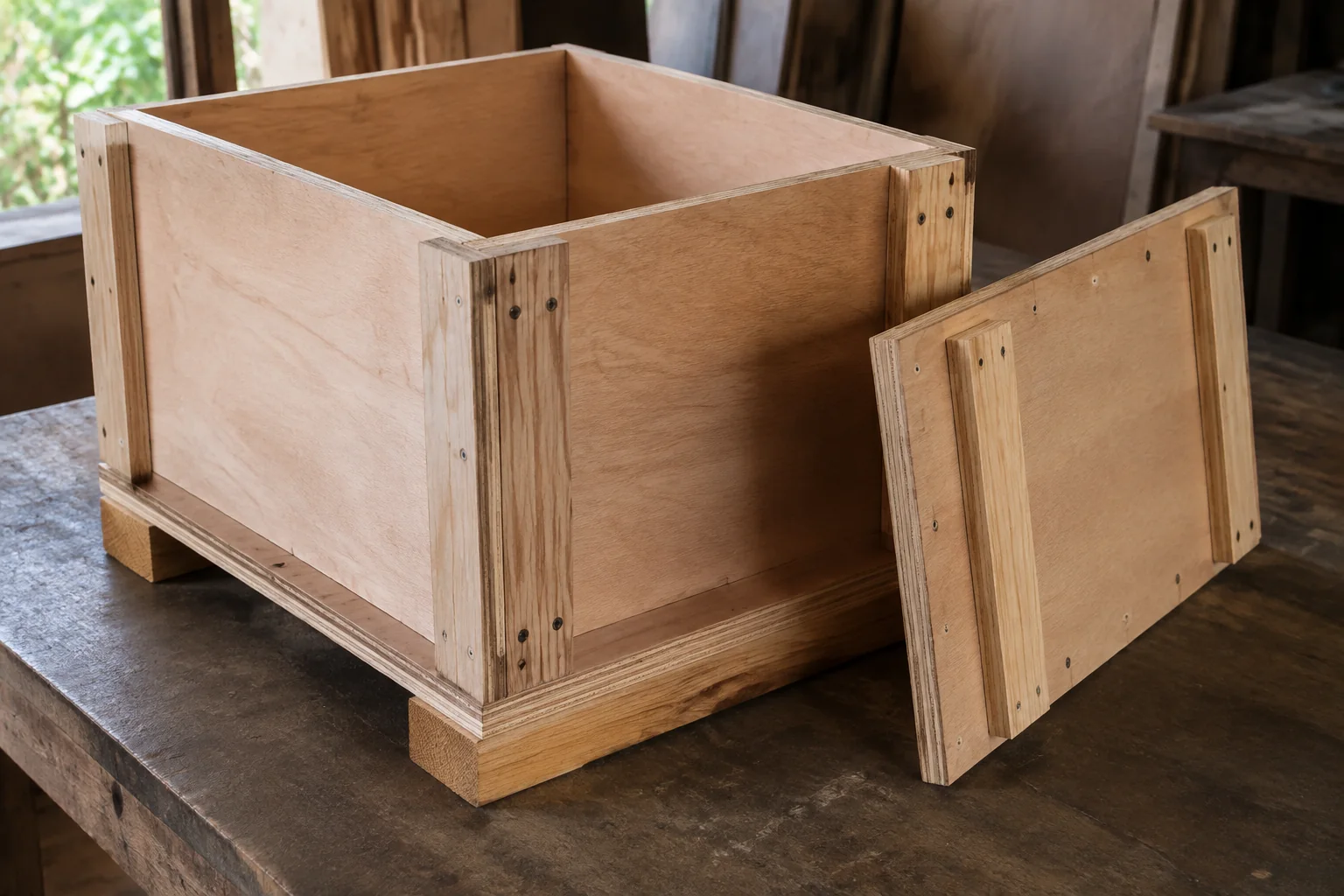
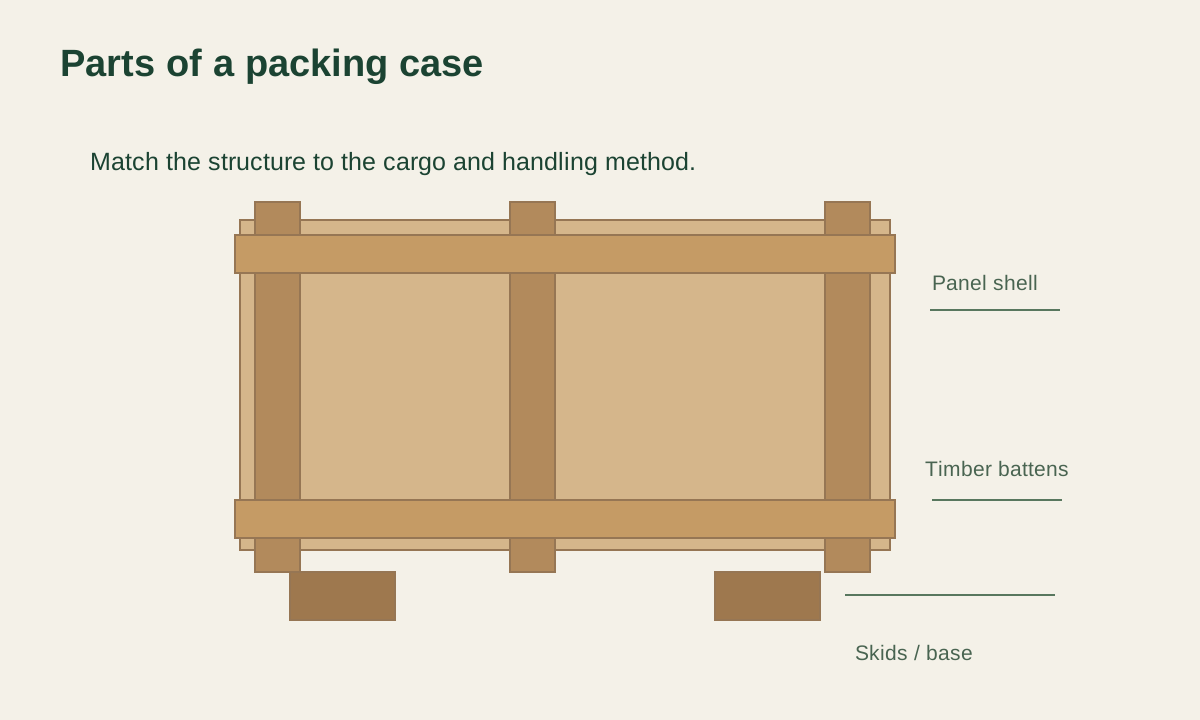
| Plywood panels with raw-wood skids, blocks or framing | Identify the regulated wood. Agree the required treatment and compliant marking for the assembled packaging. |
| Solid-wood pallets, cases or dunnage | Check the destination rules, bark requirements, approved treatment and authorised marking. |
Heat treatment is not the only approved treatment approach. The applicable method, provider and marking must satisfy the destination rules. Do not apply a mark yourself or assume that an ordinary timber label establishes compliance.
Exemption is not a customs-clearance guarantee
Removing regulated solid wood can remove the ISPM 15 treatment step for that packaging; it does not remove every inspection, documentation or cargo requirement. The IPPC also explains that its treatments do not provide continuing protection against later pest contamination. Keep the packaging clean and confirm current import conditions before shipment.
For a Cochin Wood enquiry, send the case or pallet drawing, identify every plywood and solid-wood component, and state the destination and required documents. Where required and included in the quotation, solid-wood treatment and marking are arranged through a DPPQS-registered treatment provider. The quotation records the agreed method and any treatment certificate to be supplied. See plywood boxes and crates and plywood and wooden pallets.
Questions buyers ask
Is plywood subject to the 6 mm exemption limit?
No. Thin raw wood and processed plywood are different exemption categories. Check the actual construction, including any solid-wood supports.
Does every plywood case need an ISPM 15 mark?
No. An all-processed-wood case is exempt under ISPM 15. A mixed case containing regulated wood needs the treatment and marking required for its destination.
Does a treatment mark guarantee clearance?
No. The importer must check current requirements for the packaging and cargo. Inspectors may still examine the shipment.
Request a packaging quotation with the drawing, component materials, quantity, destination and required evidence.
Official references
Sources checked 1 October 2026: IPPC ISPM 15 scope and standard; Australia DAFF exemption categories and treatment guidance; US APHIS import guidance. National guidance applies to its own jurisdiction; the importer must check the actual destination.