
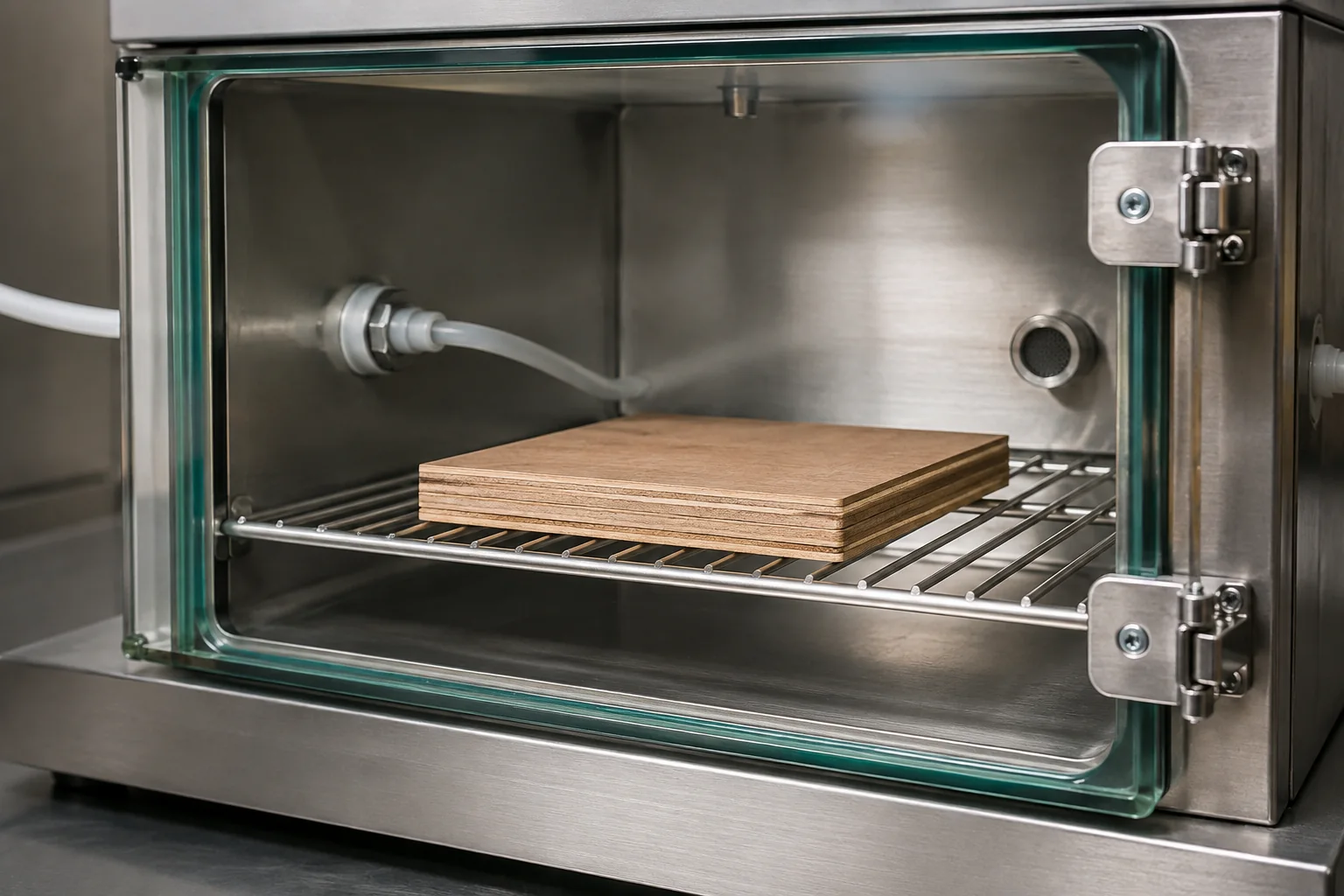
Specify the destination and end use before ordering low-emission plywood. An emission class, a bond grade and a construction-product declaration answer different questions. Ask for evidence covering the actual panel and intended use, rather than assuming one label settles every market's requirements.
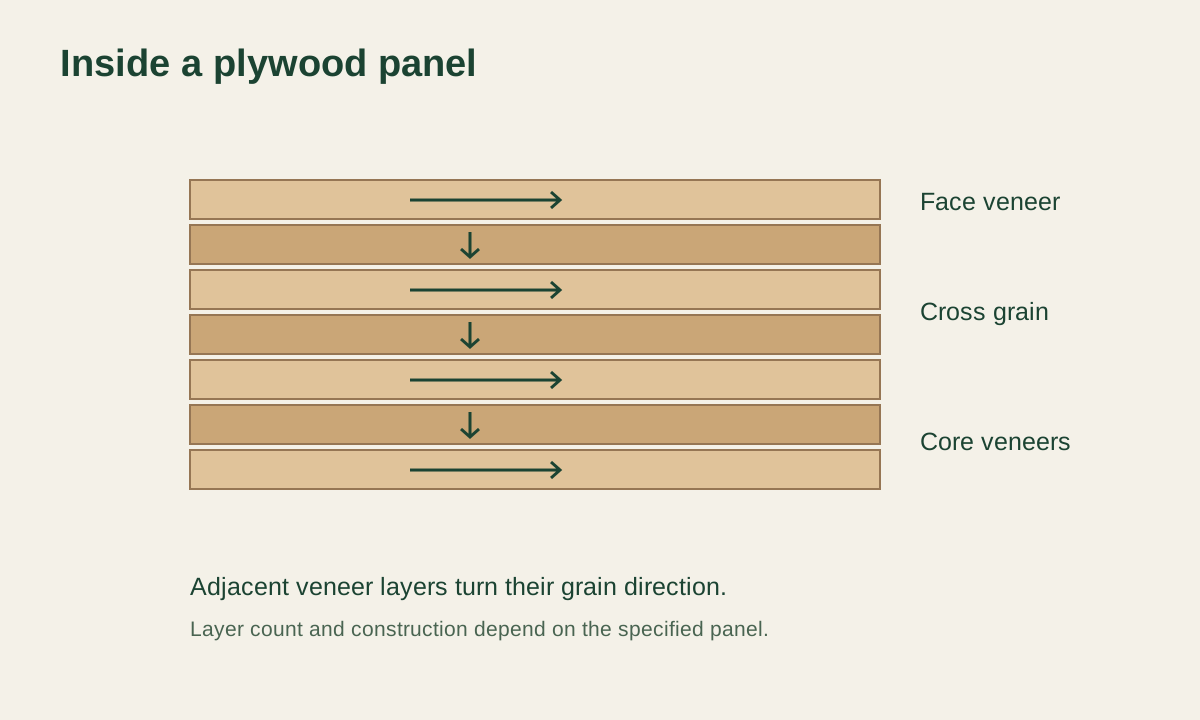
EU articles: the restriction after 6 August 2026
REACH Annex XVII Entry 77 restricts placing covered articles on the EU market after 6 August 2026 when formaldehyde released under the test conditions in Appendix 14 exceeds the applicable limit. For furniture and wood-based articles, that limit is 0.062 mg/m³. The test basis and the article being assessed matter; do not compare a result from another method as though it were the same test.
See the ECHA Entry 77 text and Commission Regulation (EU) 2023/1464. The rule contains exemptions, including articles exclusively for outdoor use; certain construction articles outside the building shell and vapour barrier that do not release formaldehyde into indoor air; and exclusively industrial or professional uses without foreseeable exposure of the general public. Other exemptions and conditions also apply. Confirm the actual article and use with the importer against the full text. An export crate or an outdoor application is not automatically exempt merely because of its name.
E1 and CE documentation are separate checks
An E1 emissions classification alone is not evidence that an article meets Entry 77. Ask which standard and test method the class refers to, which construction was tested and whether the report supports the intended requirement.
For construction products, confirm the applicable harmonised product standard and the required Declaration of Performance and CE documentation for the intended use. Those documents do not by themselves settle the separate chemical restriction. The European Commission's construction-products information is the official starting point.
United States and California
The US EPA's TSCA Title VI programme covers specified composite wood products, including hardwood plywood, with testing, certification, labelling and recordkeeping requirements for products in scope. Ask the supplier to identify the product scope and the recognised third-party certifier. California's CARB requirements must also be checked where applicable. An E1 result is not a substitute for the required US certification chain.
Use the EPA composite-wood requirements and CARB composite-wood programme to confirm the current scope and responsibilities.
What to ask for before placing an order
| Question | Evidence to request |
|---|---|
| Which product is covered? | Construction, dimensions and identifying information matching the offered panel or article. |
| What requirement is being assessed? | Destination rule, intended use, test method and any claimed exemption with its basis. |
| What was tested? | Laboratory, report date, sample identification, conditions and results. |
| What certification is required? | The relevant certificate holder, certifier, scope and validity, where the programme requires certification. |
| What travels with the order? | Agreed declarations, labels, reports and traceability, listed in the written quotation. |
Prepare your enquiry
Name the destination, intended use and required evidence alongside the panel construction and quantity. On our calibrated Okoume page, the E1 eucalyptus-core choice and hardwood BWR choice are distinct constructions. Do not transfer an emission claim from one to the other.
Send your specification with the documents your importer requires. Supply and document availability are confirmed for the quoted construction; this guide does not certify any product or shipment. Use the export document checklist to organise the rest of the order.
Official source references checked 1 October 2026. Market, product and use determine the applicable requirements.